
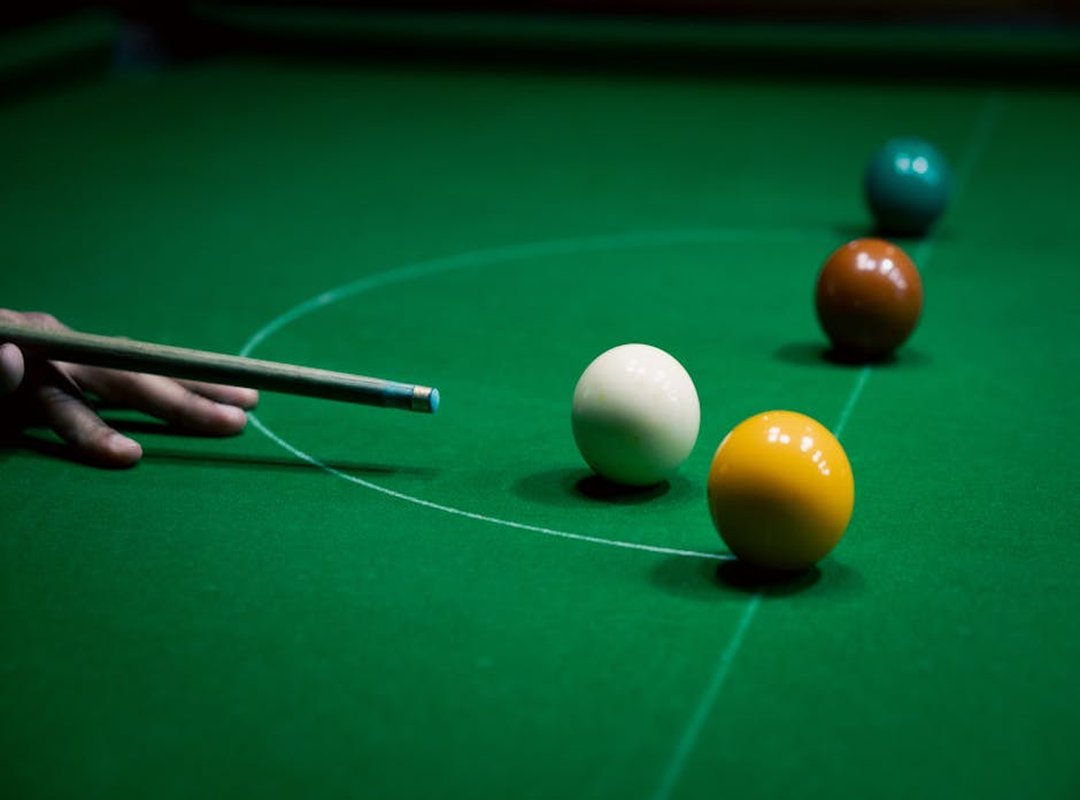
A perfect snooker game begins not with the first shot, but with a flawless ball arrangement. You want to know the official, correct way to set up a snooker table for a fair and professional game. This guide will provide a step-by-step visual and descriptive breakdown of the exact susunan snooker.
A proper setup ensures a fair break-off shot and upholds the strategic integrity of the game from the very first stroke. We’ll cover not just the ‘how’ but the ‘why’ behind the placement and common mistakes to avoid.
Building the Foundation: Racking the Red Ball Pyramid
When it comes to setting up the red balls in susunan snooker, getting it right is key. The goal is a tightly packed pyramid with no gaps. This setup is crucial for a good split on the break.
- Place the triangle rack on the table.
- Gather all 15 red balls and place them inside the triangle.
The apex red ball should be as close as possible to the Pink ball spot without touching it. This precise placement ensures the pyramid is centered and stable.
Slide the triangle forward towards the pink spot. Carefully lift it straight up without disturbing the reds. This step requires a steady hand and a bit of practice.
Pro Tip: After placing the reds, gently press them together from behind with your fingers before removing the triangle. This ensures they are all touching and the pyramid is tight.
A well-racked pyramid can make or break your game. Take the time to get it right.
Precision and Placement: Setting the Six Colors on Their Spots
I remember the first time I set up a snooker table. It was a bit overwhelming, but with practice, it became second nature. Let’s break it down step by step.
First, let’s talk about the baulk line colors. The baulk line is the line that runs across the table, 29 inches from the bottom cushion.
The ‘D’ is the semicircle at the center of the baulk line. It’s where you place the cue ball for certain shots.
Starting from the left, place the Green ball on the spot.
Next, put the Brown ball in the middle.
Finally, place the Yellow ball on the right.
To help you remember this order, use the mnemonic “God Bless You” for Green, Brown, Yellow. It’s simple and sticks in your head.
Now, let’s move to the center and top spots.
The Blue ball goes on the middle spot, which is halfway between the middle pockets.
The Pink ball is placed on the pyramid spot, which is directly below the center of the top cushion.
Lastly, the Black ball goes on its spot closest to the top cushion.
With these steps, you can set up the susunan snooker table correctly. It might take a few tries, but soon you’ll have it down pat.
Strategic by Design: Why the Snooker Arrangement Matters

The susunan snooker isn’t just a random setup. It’s a carefully crafted strategic puzzle. The placement of the Pink and Black balls near the red pack creates a high-risk, high-reward scenario.
This positioning influences break-off tactics and early-frame safety play.
Think about it. If you go for the Pink or Black ball early, you risk leaving an easy shot for your opponent. But if you manage to pot one, you can gain a significant lead.
The baulk colors—Yellow, Green, and Brown—are positioned in such a way that they are less valuable early on. They become central to safety exchanges, adding another layer of complexity to the game.
One player I spoke with said, “The baulk colors force you to think about safety first. You can’t just go for the big points without considering the risks.”
The tight pack of reds is designed to make potting a ball from the break-off shot difficult. This emphasizes the game’s initial focus on tactics over potting. It’s not about who can pot the most balls quickly; it’s about who can control the table and set up the best opportunities.
This setup ensures a level playing field, and it’s all about game balance . The arrangement makes sure that no player has an unfair advantage from the start.
It’s a complex strategic puzzle from the very first shot.
| Ball | Value | Position |
|---|---|---|
| Red | 1 | Tight pack |
| Pink | 6 | Near the red pack |
| Black | 7 | Near the red pack |
| Yellow | 2 | Baulk line |
| Green | 3 | Baulk line |
| Brown | 4 | Baulk line |
Understanding the strategic reasoning behind the setup is crucial. It’s not just about knowing where the balls are; it’s about understanding why they’re there and how to use that to your advantage.
Pro tip: Focus on controlling the table rather than going for big points early. Safety and tactical play are key in the opening stages.
In snooker, every shot matters. The arrangement ensures that the game remains a balanced and challenging experience. Just like in trading, position sizing strategies to protect your trading capital are essential to manage risk and maximize potential.
From Amateur to Pro: Avoiding Common Setup Pitfalls
Setting up a snooker table can be a real pain. One of the most common mistakes is leaving gaps in the red ball pack. This leads to a poor break and can ruin your game before it even starts.
Another frustration is misplacing the baulk colors. Mixing up the green and yellow balls is a frequent error, especially for beginners. It’s annoying and can throw off your entire strategy.
Clean spots are crucial. Wipe the ball spots on the table to prevent balls from rolling off-center. It’s a small step but makes a big difference.
Finally, here’s a quick optimization hack. Tap the apex red ball gently to ensure it’s perfectly on the central line of the table. This gives you a symmetrical susunan snooker and sets you up for a better game.
These little details matter. They can turn a frustrating session into a smooth, enjoyable one.
Your Turn to Break: The Perfect Rack Awaits
A tight red pyramid and precisely spotted colors are non-negotiable for a legitimate game. This ensures that every match starts on a fair and professional note.
The reader’s search for the correct susunan snooker has been fully answered with a clear, actionable guide. Mastering this setup is the first step toward playing with more confidence and consistency.
Head to a table and practice the setup using this guide until it becomes second nature. Attention to this small detail elevates the entire playing experience.
 Josephine Kieferonald is the kind of writer who genuinely cannot publish something without checking it twice. Maybe three times. They came to investment planning approaches through years of hands-on work rather than theory, which means the things they writes about — Investment Planning Approaches, Advanced Trading Signal Analysis, Market Momentum Watch, among other areas — are things they has actually tested, questioned, and revised opinions on more than once.
That shows in the work. Josephine's pieces tend to go a level deeper than most. Not in a way that becomes unreadable, but in a way that makes you realize you'd been missing something important. They has a habit of finding the detail that everybody else glosses over and making it the center of the story — which sounds simple, but takes a rare combination of curiosity and patience to pull off consistently. The writing never feels rushed. It feels like someone who sat with the subject long enough to actually understand it.
Outside of specific topics, what Josephine cares about most is whether the reader walks away with something useful. Not impressed. Not entertained. Useful. That's a harder bar to clear than it sounds, and they clears it more often than not — which is why readers tend to remember Josephine's articles long after they've forgotten the headline.
Josephine Kieferonald is the kind of writer who genuinely cannot publish something without checking it twice. Maybe three times. They came to investment planning approaches through years of hands-on work rather than theory, which means the things they writes about — Investment Planning Approaches, Advanced Trading Signal Analysis, Market Momentum Watch, among other areas — are things they has actually tested, questioned, and revised opinions on more than once.
That shows in the work. Josephine's pieces tend to go a level deeper than most. Not in a way that becomes unreadable, but in a way that makes you realize you'd been missing something important. They has a habit of finding the detail that everybody else glosses over and making it the center of the story — which sounds simple, but takes a rare combination of curiosity and patience to pull off consistently. The writing never feels rushed. It feels like someone who sat with the subject long enough to actually understand it.
Outside of specific topics, what Josephine cares about most is whether the reader walks away with something useful. Not impressed. Not entertained. Useful. That's a harder bar to clear than it sounds, and they clears it more often than not — which is why readers tend to remember Josephine's articles long after they've forgotten the headline.