
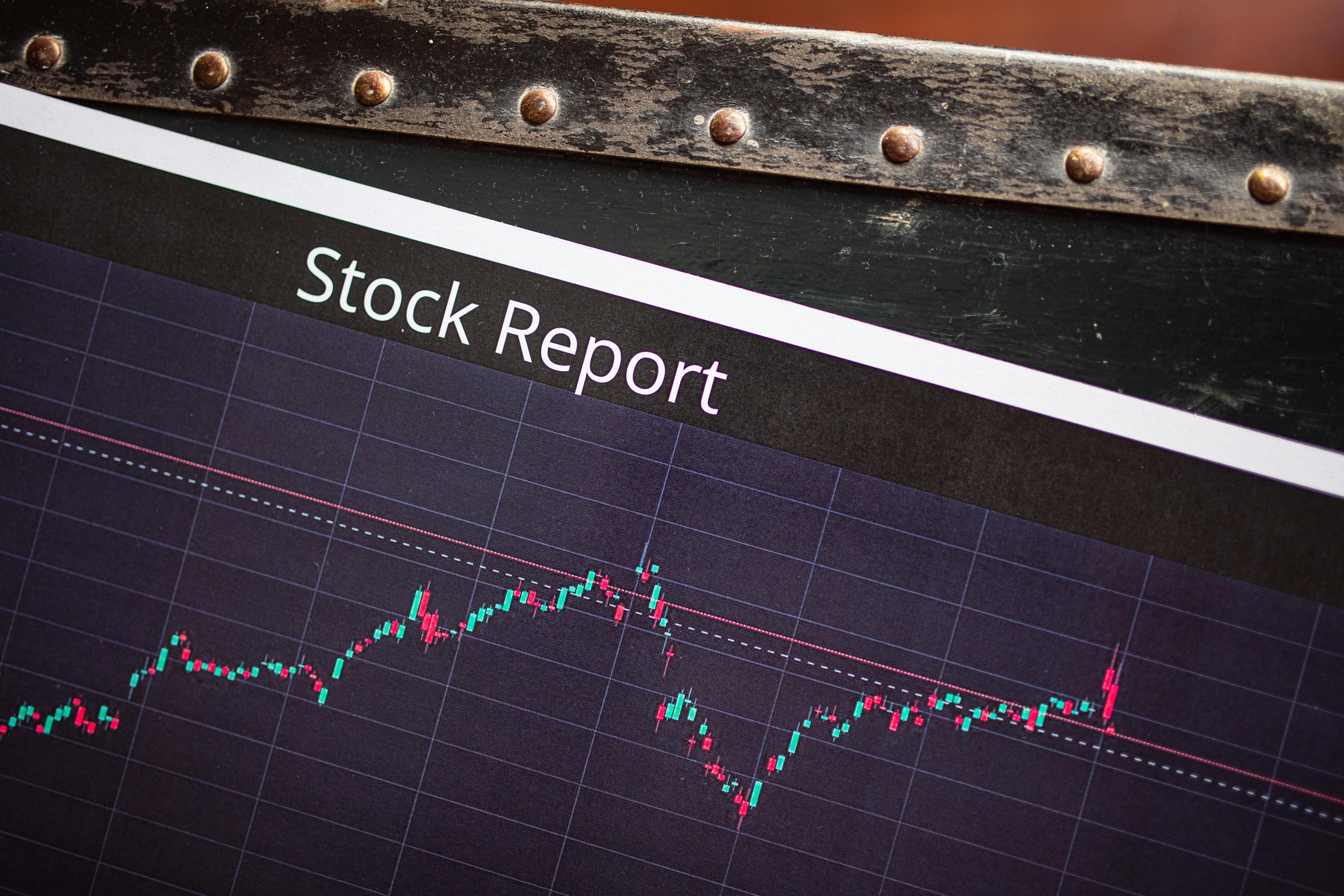
Analyzing a stock is about following one process: business quality, financials, valuation, chart, risk and decision. The idea is to remove opinion and provide a path from “I like this company” to “the numbers support this trade or investment”. A resource such as https://finbotica.com/stock-analysis/ helps by giving the research a clearer order: what to check first, how to compare signals, and how to connect financial data, market behavior, and risk before making a final call.
Start complete stock analysis with the business
Reading before opening a chart, inquire what the company actually sells, who is paying and why people continue to buy. This initial action sieves away weak ideas early. Without being able to describe the business in two sentences, the remaining work of the stock research process will be wobbly.
Use this quick test:
- What does the company sell?
- Who are its main customers?
- What makes revenue repeat?
- What could damage demand?
- Does the company have pricing power?
It’s easier to work with a good business because the numbers make sense. With a weak business, it can be difficult to see the forest from the trees.
Build one structured workflow for the numbers
The next step in a thorough stock analysis is financial review. Don’t attempt to read all the details of every report immediately. Instead, get a quick overview by focusing on the main giveaways: revenues, profits, debts, cash flows, and margins.
| Area to Check | What It Shows | Red Flag |
| Revenue | Demand trend | Sales falling without a clear reason |
| Margins | Pricing and cost control | Profit shrinking while sales rise |
| Cash flow | Real earning power | Profit looks good, but cash is weak |
We can do a little experiment. Look at three years of revenue and operating profit. If revenue increased 30% and operating profit was unchanged, this may be expensive growth. If revenue growth was 15%, and operating profit growth was 25%, they may be doing better.
This is where a systematic stock analysis can come in handy. It converts numbers into a signal: better, same or worse.
Add technical stock analysis without letting it take over
Timing has to be validated by technical stock analysis as opposed to substituting business judgment. Even a great company is a poor purchase at the wrong price. A poor company could recover, but that is not a good long-term concept.
Look at:
- Price trend over 6–12 months.
- Support and resistance zones.
- Volume during breakouts or sell-offs.
- Moving averages.
- Relative strength against the market.
The question becomes: does the market support your work or not? If the fundamentals are improving, but the stock is making a lower high, wait until it’s stronger.
To fully analyse a stock, both the charts and the fundamentals should be considered. One shows the value of the company. The other tells you what traders are doing now.
Turn the stock research process into a valuation check
Valuation is something a lot of investors rush doing. They spot a small P/E ratio and think that a stock is a bargain. But that’s potentially a trap. A lower price might be due to things like declining earnings, pressure from debt, or bad growth.
Compare valuation in three ways:
| Method | Best Use | Weakness |
| P/E ratio | Fast earnings comparison | Can mislead when earnings are cyclical |
| Price-to-sales | Growth companies | Ignores profit quality |
| DCF estimate | Long-term value view | Sensitive to assumptions |
Here’s a general rule of thumb: no one number should be the sole determinant. A comprehensive and in-depth stock analysis, for example, should include a comparison of forecasts with growth, revenues, cash and risk.
Finish complete stock analysis with a decision score
End the investment analysis workflow with a scorecard. This prevents emotional buying after one good chart or one strong headline.
Rate each area from 1 to 5:
- Business quality.
- Financial strength.
- Valuation.
- Technical setup.
- Risk level.
- Personal time horizon.
If the overall scoring turns out to be poor, simply ignore the stock. In case the scoring is somehow mixed, then put it in your watchlist. On the other hand, if the scoring is strong and the stock price provides a margin of safety, this might be an idea worthy of investment.
The buy decision is supposed to be made after examining the whole process, not just one piece of the data. That’s what in-depth stock analysis does: it provides a step in the process that keeps an investor from acting impulsively.
 Josephine Kieferonald is the kind of writer who genuinely cannot publish something without checking it twice. Maybe three times. They came to investment planning approaches through years of hands-on work rather than theory, which means the things they writes about — Investment Planning Approaches, Advanced Trading Signal Analysis, Market Momentum Watch, among other areas — are things they has actually tested, questioned, and revised opinions on more than once.
That shows in the work. Josephine's pieces tend to go a level deeper than most. Not in a way that becomes unreadable, but in a way that makes you realize you'd been missing something important. They has a habit of finding the detail that everybody else glosses over and making it the center of the story — which sounds simple, but takes a rare combination of curiosity and patience to pull off consistently. The writing never feels rushed. It feels like someone who sat with the subject long enough to actually understand it.
Outside of specific topics, what Josephine cares about most is whether the reader walks away with something useful. Not impressed. Not entertained. Useful. That's a harder bar to clear than it sounds, and they clears it more often than not — which is why readers tend to remember Josephine's articles long after they've forgotten the headline.
Josephine Kieferonald is the kind of writer who genuinely cannot publish something without checking it twice. Maybe three times. They came to investment planning approaches through years of hands-on work rather than theory, which means the things they writes about — Investment Planning Approaches, Advanced Trading Signal Analysis, Market Momentum Watch, among other areas — are things they has actually tested, questioned, and revised opinions on more than once.
That shows in the work. Josephine's pieces tend to go a level deeper than most. Not in a way that becomes unreadable, but in a way that makes you realize you'd been missing something important. They has a habit of finding the detail that everybody else glosses over and making it the center of the story — which sounds simple, but takes a rare combination of curiosity and patience to pull off consistently. The writing never feels rushed. It feels like someone who sat with the subject long enough to actually understand it.
Outside of specific topics, what Josephine cares about most is whether the reader walks away with something useful. Not impressed. Not entertained. Useful. That's a harder bar to clear than it sounds, and they clears it more often than not — which is why readers tend to remember Josephine's articles long after they've forgotten the headline.