
If you’re searching for a clear, practical way to improve your trading decisions, this risk reward ratio guide is designed to give you exactly that. Many traders struggle not because they lack opportunities, but because they miscalculate how much they’re risking compared to what they stand to gain. Without a structured approach, even strong strategies can lead to inconsistent results.
This article focuses on helping you understand how to properly calculate, evaluate, and apply risk-to-reward ratios in real market conditions. You’ll learn how to align each trade with disciplined risk management principles, identify high-probability setups, and avoid common mistakes that erode capital over time.
The insights shared here are grounded in proven trading methodologies, real-world market analysis, and established financial principles used by experienced market participants. By the end, you’ll have a clear framework for making more confident, data-driven trading decisions that protect your downside while maximizing potential upside.
Decoding the Language: What Are Risk and Reward?
Before you put a dollar into anything, you need to understand two words: reward and risk.
Reward (The Upside) is the potential return you earn from an investment. That return can come in different forms:
- Capital gains (buy a stock at $10, sell at $15)
- Dividends (regular profit payments to shareholders)
- Interest (payments earned from bonds or savings)
If you invest $1,000 and it grows to $1,200, your $200 gain is your reward. Simple.
Risk (The Downside) is the possibility you lose some or all of your original money. It shows up in different ways:
- Market risk: the entire market drops
- Inflation risk: rising prices reduce purchasing power
- Specific risk: one company underperforms or fails
Think of it like cars. A race car can go 200 mph (high reward), but it’s far more dangerous than a family sedan (lower risk, lower speed).
Here’s the truth: you cannot separate risk and reward. Higher potential returns usually mean higher potential losses.
Some argue you should avoid risk entirely. But avoiding all risk often means your money barely grows (and inflation quietly eats it).
Recommendation: Use a risk reward ratio guide before every investment decision. Aim for opportunities where the potential upside clearly outweighs the downside. Discipline beats hype every time.
The Risk-Reward Spectrum: Finding Your Place on the Map
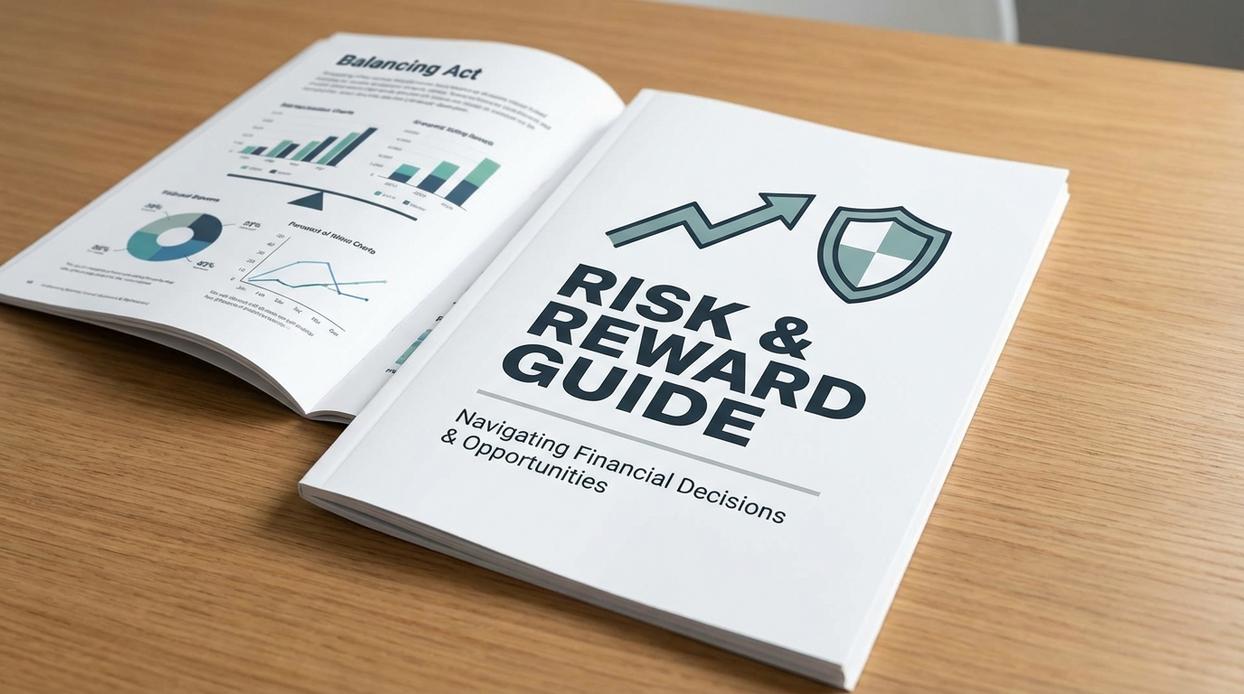
Every investment lives somewhere on the risk-reward spectrum—a sliding scale from stability to speculation. In simple terms, risk is the chance you could lose money, while reward is the potential return you might earn. Generally speaking, the higher the potential reward, the greater the risk (there’s no cheat code here).
Low End: Stability First
At the conservative end, you’ll find high-yield savings accounts, CDs (certificates of deposit), and government bonds. These are considered “low risk” because they’re often backed by banks or governments. However, their returns are modest. In some periods, especially when inflation rises above 3% annually (U.S. Bureau of Labor Statistics), these vehicles may not preserve purchasing power. The benefit? Predictability and capital preservation.
The Middle Ground: Balanced Growth
Moving up the spectrum, assets like corporate bonds, index funds, and blue-chip stocks offer moderate growth with manageable volatility. Index funds, for example, track broad markets like the S&P 500, historically returning about 7–10% annually over the long term (S&P Global). This category appeals to investors seeking balance—steady appreciation without extreme swings.
- Corporate bonds: Higher yield than government bonds, moderate credit risk
- Index funds: Broad diversification, lower fees
- Blue-chip stocks: Established companies with stable earnings
High End: High Stakes, High Potential
At the aggressive end sit growth stocks, cryptocurrencies, and venture capital. These investments can deliver explosive returns—Bitcoin’s 2017 surge is a famous example—but they also carry significant downside risk. A disciplined approach, guided by a clear risk reward ratio guide, helps investors align potential gains with acceptable losses.
Ultimately, your place on the map depends on your goals, timeline, and tolerance for volatility.
From Theory to Practice: How to Measure Investment Risk
Introduction to Risk Metrics
Risk shouldn’t be a gut feeling. Investors use measurable tools—called risk metrics (numerical indicators that quantify uncertainty)—to make smarter decisions. If you’re not measuring risk, you’re guessing. And guessing is not a strategy.
Standard Deviation (Volatility)
Standard deviation measures how much an asset’s price moves around its average. Picture a stock chart with wild daily swings versus one with smooth, steady growth. The wilder chart has higher volatility—and higher risk.
Recommendation: If you’re building long-term wealth, favor investments with volatility you can realistically tolerate. (If sharp drops keep you up at night, that’s data.) Conservative investors should prioritize lower standard deviation holdings.
Beta (Market Risk)
Beta compares a stock’s volatility to the overall market (often the S&P 500). A Beta above 1 means the stock moves more than the market; below 1 means it moves less.
Recommendation: Use high-Beta stocks strategically for growth phases, but balance them with low-Beta assets to stabilize your portfolio.
The Sharpe Ratio (Risk-Adjusted Return)
The Sharpe Ratio measures how much return you earn per unit of risk. Higher is better. It’s the closest thing to a performance efficiency score.
Pro tip: Combine Sharpe analysis with a risk reward ratio guide and structured portfolio risk assessment methods for active investors to make disciplined decisions—not emotional ones.
Know Thyself Before You Invest
One of the biggest frustrations in investing is being told to “take smart risks” without anyone explaining what that actually means. You watch markets swing, headlines panic, and suddenly you are questioning every decision. It is exhausting.
It starts with understanding your personal risk tolerance—the level of uncertainty you can handle without losing sleep. A 25-year-old saving for retirement can usually afford more volatility than someone five years away from it. Time horizon and goals matter.
Diversification is the simplest fix to the “all my eggs in one basket” mistake. Spreading investments across stocks, bonds, and cash helps smooth returns because different assets react differently to the same event.
Pro tip: if your portfolio feels like a rollercoaster, revisit your risk reward ratio guide and rebalance.
Asset allocation is where this becomes practical. Your mix of assets should reflect your tolerance and goals, not market noise. That alignment builds confidence. Finally.
Putting the Risk-Reward Principle to Work for You
The relationship between risk and reward isn’t something to fear—it’s a tool you can use to your advantage. When you truly understand the trade-off, you stop guessing and start making calculated decisions that align with your financial goals.
If you’ve felt stuck between playing it too safe or taking on too much uncertainty, the solution is simple: evaluate every opportunity through a clear risk reward ratio guide and make intentional moves.
Now, review your current investments. Do they match your goals and risk tolerance? If not, it’s time to adjust. Take control today—analyze, rebalance, and move forward with confidence.